Silgan Holdings, backed by a $1B equity injection from American Industrial Partners, is acquiring Trivium Packaging in a $3.4B carve-out that radically deleverages Silgan while creating a $7.3B metal packaging giant.
In a transaction that illustrates the evolving complexity of corporate mergers, U.S. consumer packaging manufacturer Silgan Holdings has partnered with private equity firm American Industrial Partners (AIP) to acquire European packaging firm Trivium Packaging. Announced on October 19, 2026, the deal values Trivium at $3.4 billion, including debt, and provides an exit for its current owners, the Ontario Teachers' Pension Plan (OTPP) and Ardagh Group SA.
However, the headline acquisition number masks the true scale and structural ingenuity of the deal. Silgan is not simply buying a competitor; it is folding its own existing metal containers business into the transaction to create a newly ring-fenced, $7.3 billion global joint venture called Silgan Metal Containers and Closures (Silgan MCC). Through this sponsor-strategic partnership, Silgan maintains majority control of the new entity while extracting a massive $2.3 billion cash dividend to aggressively pay down its corporate debt.
This transaction highlights a growing trend in industrial M&A: corporate acquirers utilizing private equity minority partners to achieve transformational scale without destroying their own balance sheets.
The Strategic Imperative: Scale vs. Leverage
The global packaging industry has faced intense margin pressure over recent cycles, squeezed by persistent inflation in raw materials and ongoing geopolitical supply chain disruptions. In this environment, scale is the primary defense mechanism. Larger entities can negotiate better terms with raw material suppliers, optimize global manufacturing footprints, and invest more heavily in the sustainable, recyclable packaging formats increasingly demanded by major consumer brands.
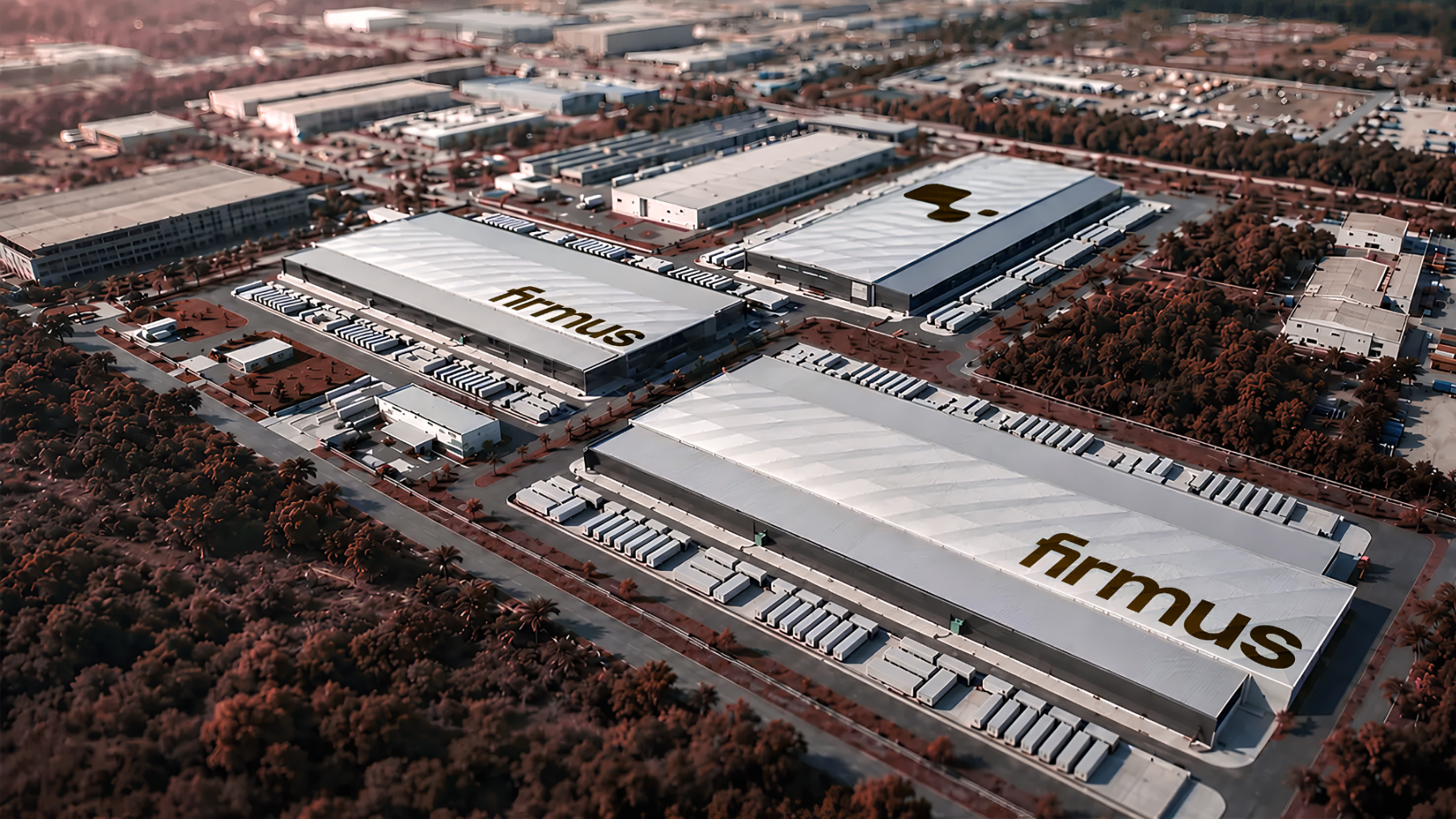
Trivium Packaging, which generates approximately $3 billion in annual net sales across 57 global locations, offers exactly that scale. But acquiring a $3.4 billion asset traditionally requires a corporate buyer to either issue highly dilutive equity or take on a burdensome amount of debt, often risking credit downgrades.
Silgan chose a third path. By partnering with AIP, a firm known for its deep expertise in industrial carve-outs and operational turnarounds, Silgan engineered a structure that achieves the benefits of consolidation while actually improving the parent company's credit profile.
The Financial Architecture of the Joint Venture
The mechanics of the Silgan-AIP deal rely on the creation of a standalone balance sheet for the new joint venture, entirely separate from Silgan Holdings.
The Valuation and Contribution:
To form Silgan MCC, both parties are contributing assets or capital:
Silgan's Contribution: Silgan is carving out its existing metal containers and closures segment, which the parties have valued at $3.8 billion (representing an 8.1x multiple on its $469.1 million in LTM Adjusted EBITDA).
AIP's Contribution: AIP is injecting $1.0 billion in pure cash equity.
The Target: Trivium is being acquired for $3.4 billion (representing a 7.1x multiple on its $478.9 million in LTM Adjusted EBITDA).
Combined, the new Silgan MCC boasts an enterprise value of $7.3 billion and a base Adjusted EBITDA of approximately $948 million. Because Silgan's contributed assets are worth significantly more than AIP's cash equity, Silgan will retain a 60% controlling ownership stake in the joint venture and nominate three of its five board directors, while AIP takes 40% and two board seats.
The Debt Financing and the $2.3 Billion Dividend:
The ingenuity of the deal lies in the debt syndication. A five-bank consortium, comprising Wells Fargo, Goldman Sachs, RBC Capital Markets, Deutsche Bank, and BofA Securities, has provided fully committed financing to capitalize Silgan MCC.
This debt facility serves two purposes. First, alongside AIP's $1 billion equity check, it funds the $3.4 billion purchase of Trivium. Second, and crucially, it funds a $2.3 billion cash distribution paid directly back to Silgan Holdings.
Reverse-engineering the math reveals an implied debt load for the new joint venture of approximately $4.7 billion to $4.8 billion. Against the combined base EBITDA of $948 million, this translates to an opening leverage multiple of nearly 5.0x. However, Silgan expects the integration to generate $225 million in run-rate synergies ($75 million in year one, scaling to $150 million in year two). If those synergies are fully realized, the pro forma synergized EBITDA rises to $1.173 billion, bringing the effective leverage down to a much more manageable 4.0x.
Impact on Silgan Holdings: A Credit Transformation
For Silgan Holdings, the extraction of $2.3 billion in cash fundamentally transforms its corporate credit profile. Silgan has stated it will use the dividend strictly to retire existing parent-level debt.
Because the $4.7 billion in new debt sits entirely on the Silgan MCC balance sheet and is non-recourse to the parent, Silgan Holdings is effectively shielded from the leverage burden of the metal packaging business. If Silgan MCC faces future margin compression, Silgan Holdings' core corporate assets cannot be claimed by the JV's creditors.
Furthermore, this carve-out alters Silgan's overarching business mix. By shifting the capital-intensive metal container business into a separate vehicle, Silgan's remaining wholly-owned operations become heavily concentrated in its Dispensing and Specialty Closures segments. These segments typically command stronger credit ratings and higher valuation multiples due to their superior EBITDA margins and stronger free cash flow conversion. The transaction allows Silgan to monetize its legacy metal assets upfront, drastically deleverage its parent balance sheet, and still retain 60% of the upside in a $7.3 billion packaging behemoth.
The LP Liquidity Angle: Ontario Teachers' Exit
The transaction is equally significant for the sellers, particularly the Ontario Teachers' Pension Plan (OTPP). OTPP originally invested in Exal, Trivium's predecessor, in 2010. Through subsequent mergers, they helped build the company into a global player.
The sale to Silgan and AIP provides a full exit for OTPP after an exceptionally long 16-year hold period. In an era where Limited Partners (LPs) are heavily focused on DPI (Distributions to Paid-In Capital) and are pressuring General Partners to return cash, this $3.4 billion liquidity event is notable. It highlights that while the IPO market remains selective and sponsor-to-sponsor exits face valuation gaps, strategic combinations funded by bespoke private equity partnerships remain a viable path to liquidity for mature, large-cap industrial assets.
Ardagh Group, which held a roughly 42% minority stake in Trivium, expects net cash proceeds of about $90 million from the sale, which it plans to direct toward debt reduction or reinvestment in its own core business.

Conclusion
Subject to regulatory and works council approvals, the Silgan-AIP acquisition of Trivium is expected to close in mid-2027. It stands as a blueprint for modern industrial consolidation. By merging operational synergies with the financial engineering capabilities of private equity, Silgan has managed to double its scale in metal packaging while simultaneously extracting billions in cash to secure its own balance sheet. As borrowing costs normalize and supply chain pressures persist, the sponsor-strategic joint venture is likely to become an increasingly common mechanism for corporate M&A.
Source: Financial Times, Euronext, OOTP.

Comments