
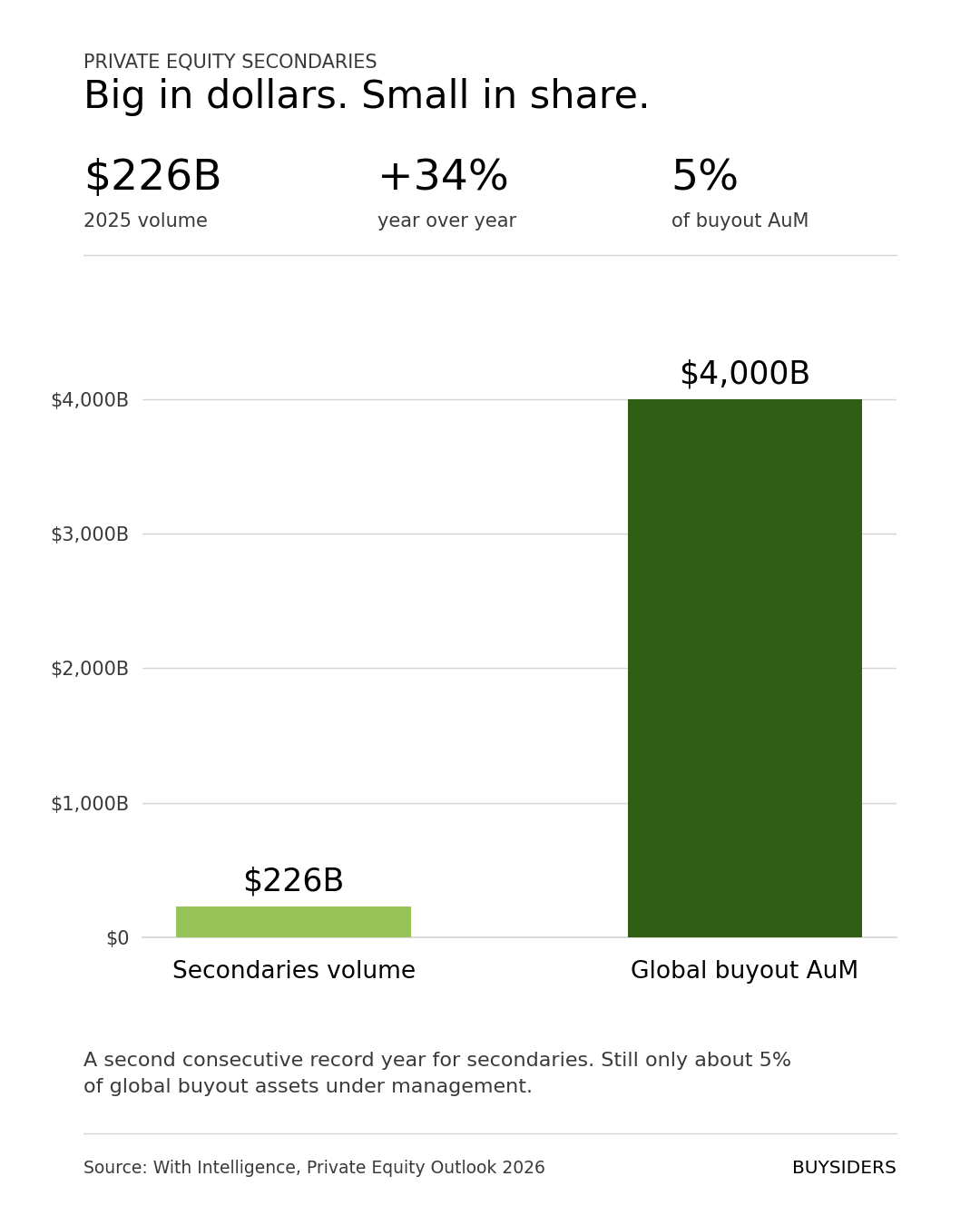
Private equity secondaries transaction volume reached $226 billion in 2025, up more than 34% year over year and a second consecutive record, according to With Intelligence's Private Equity Outlook 2026.
The driver is liquidity, not distress. Exits slowed sharply after 2022, leaving investors with far less cash returned than expected. More than 63% of active portfolio companies in North America have now been held for over four years, and the six largest US listed managers realized roughly 16% of invested capital in 2025, up from a low of about 12% in 2023, but still below historical norms.
That has left allocators constrained. An analysis of the ten largest US investors that adjusted their targets over the past 18 months found they raised private equity allocations by more than 1.5% on average, yet remain approximately $7.4 billion above those revised levels on a net dollar basis.
The result is a structural shift. Large allocators are selling stakes to free capital, consolidate manager rosters, and restore flexibility. Combined with rising GP-led continuation deals, secondaries are becoming a permanent feature of the market rather than a release valve, reshaping private equity into a more actively managed asset class.
Secondaries still account for only about 5% of roughly $4 trillion in global buyout assets under management, leaving room for further expansion in 2026.