
The United States is currently experiencing a historic acceleration in wealth inequality, reaching levels not seen since the Federal Reserve began tracking this data in 1989. The latest Distributional Financial Accounts through the second quarter of 2026 paint a stark picture: the gap between the ultra-rich and the rest of the country is not just widening; it is rocketing apart. The top 0.1% of households now command nearly 15% of all U.S. wealth, a significant jump from 10% following the 2009 financial crisis.
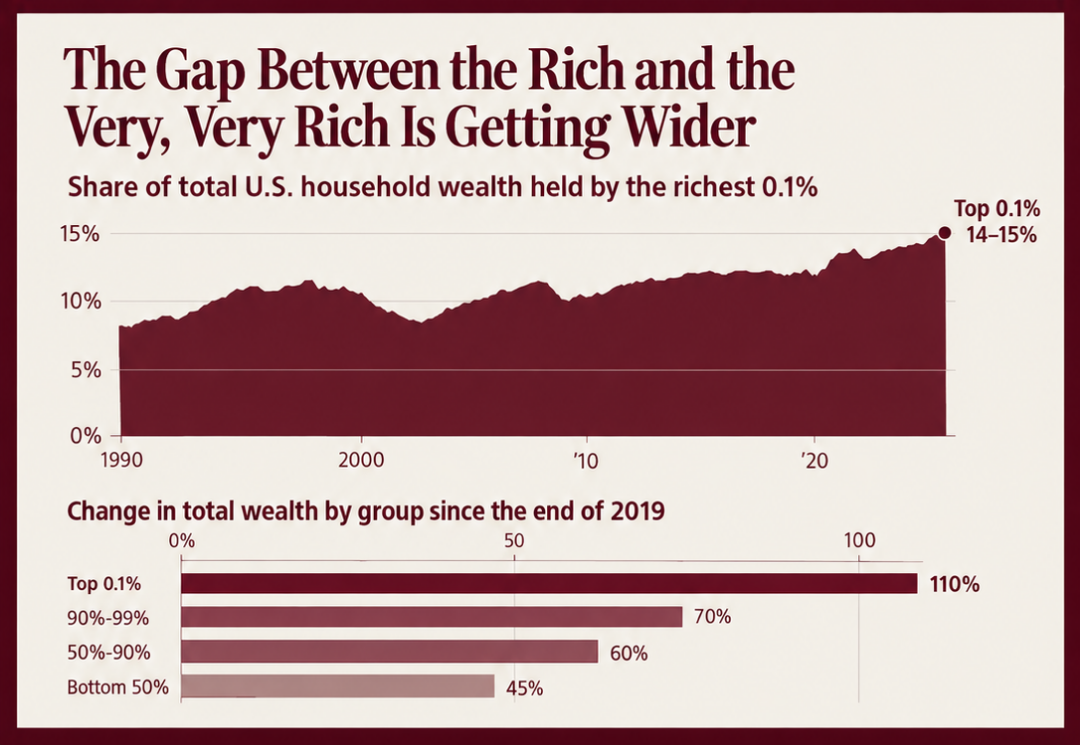
The divergence became particularly pronounced following the 2020 pandemic. Since the end of 2019, the top 0.1% has seen their wealth more than double, adding approximately $14.5 trillion to their collective net worth. This group, consisting of roughly 137,000 households with an average wealth exceeding $200 million, largely derives their income from business ownership and capital gains, rather than wages. In stark contrast, the bottom 50% of Americans hold roughly $4.28 trillion combined, representing just 2.3% of the nation's total wealth. While the bottom half experienced the highest percentage gain in wealth since 2019, this growth occurred from an extremely low baseline.
 RelatedMichael Dell’s Family Office Buys $406 Million Stake in SK Inc.
The primary driver of this disparity is the fundamental difference in asset ownership between the wealth tiers. The ultra-wealthy are heavily concentrated in corporate equities and mutual funds, holding over $16 trillion in these assets. As the S&P 500 surged, gaining 21% in the year ending June 2026 alone, the top 0.1% captured an estimated $4 trillion in new wealth from the market. The bottom 50%, conversely, hold the majority of their wealth in real estate. The post-COVID housing boom provided a temporary lift for this group, but as the housing market flattened, so did their wealth accumulation.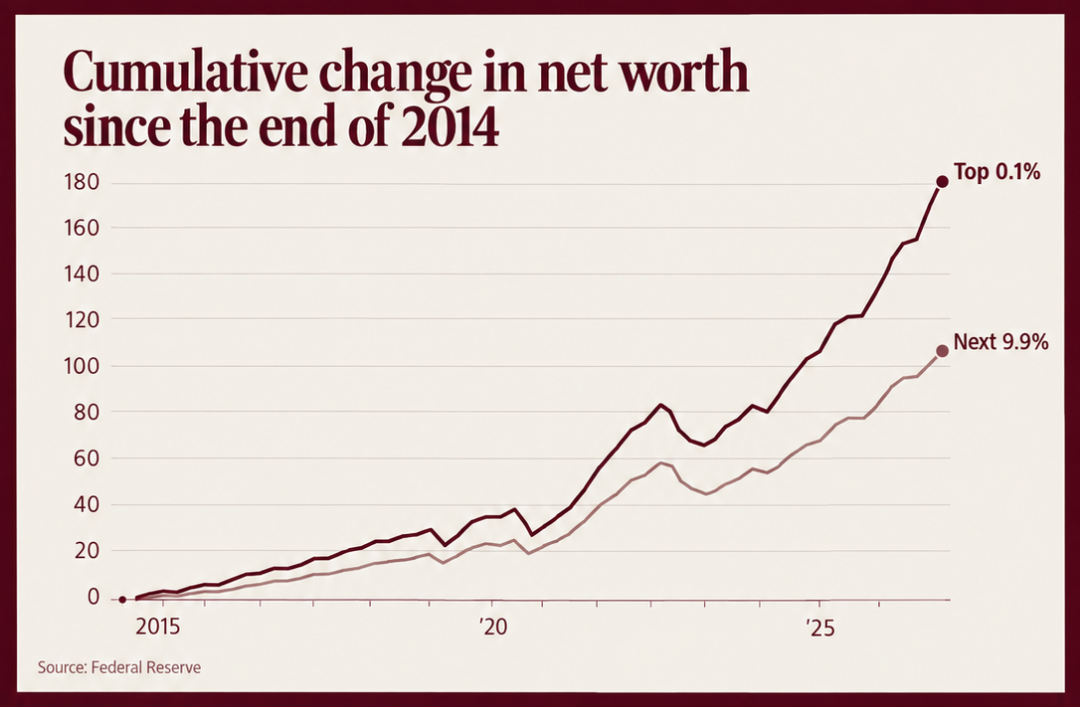
Furthermore, structural policy shifts have exacerbated the divide. Recent fiscal legislation, most notably the One Big Beautiful Bill Act (OBBBA) enacted in 2025, significantly lowered tax burdens for the highest earners through reductions in the top marginal income rate, cuts to estate taxes, and expanded deductions for pass-through businesses. These policies disproportionately benefit those whose income is derived from capital rather than labor. Compounding this advantage is the ability of the ultra-wealthy to leverage their assets, borrowing against their portfolios to fund expenses without triggering capital gains taxes, allowing their wealth to grow continuously. As this economic reality solidifies, the concentration of wealth at the very top is becoming an increasingly volatile political flashpoint.
Source: Wall Street Journal




Comments